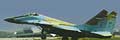
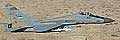
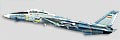
The history of the Mikoyan MiG-29 Fulcrum in the service of the Islamic Republic of Iran Air Force (IRIAF) is a central chapter in Iran's post-revolutionary efforts to diversify its aerial inventory and reduce its total dependence on aging Western platforms.
1. Initial Acquisition (Late 1980s–Early 1990s)
Following the conclusion of the Iran-Iraq War in August 1988, Iran sought to rebuild its severely depleted air arm. While previous inventories were almost exclusively of United States origin, the IRIAF turned toward the Soviet Union to acquire modern interceptors.
- First Deliveries: The MiG-29 Fulcrum was inducted into service beginning in December 1988.
- Initial Fleet Strength: Reports from the early 1990s indicated that Iran took delivery of approximately 35 MiG-29 airframes, including the MiG-29A single-seat interceptor and a handful of MiG-29UB two-seat combat trainers.
2. Strategic Role and Fleet Maintenance (1990s–2022)The MiG-29 became a cornerstone of Iran’s air defense network, specifically tasked with the high-readiness interceptor role.
- Serviceability Advantage: Unlike the IRIAF's US-origin types (F-14, F-4, F-5), which struggled under long-term embargoes and maintained serviceability rates around 60%, the Russian-origin MiG-29 fleet generally enjoyed a higher serviceability rate of approximately 80%.
- Organizational Structure: By the early 2020s, the MiG-29 fleet was organized into two active fighter squadrons.
- Tactical Integration: The MiG-29 was integrated into a Russian-built integrated air defense system, providing a layer of protection for Iranian territorial waters and critical infrastructure alongside indigenous missile systems.
3. Fleet Expansion and Training Enhancements (2023–2024)
In recent years, Iran has sought to bolster its air defense capabilities amidst heightening regional tensions.
- Training Fleet Boost: In 2024, inventory reports noted that the IRIAF had fielded six additional MiG-29UB two-seat variants to enhance its pilot instruction and conversion capacity.
- Inventory Status: By late 2024 and early 2025, active military fleet directories listed a mix of 18 combat-active MiG-29s and 6 training-specific MiG-29 airframes. Other assessments continued to cite a total operational holding of 35 MiG-29A/UB units.
4. Geopolitical Conflict and Current Posture (2025–2026)The MiG-29 fleet remains an active component of Iran's defense in 2026, though it has faced significant operational pressure.
- Combat Action: During the "12-Day War" in June 2025, Israeli airstrikes targeted Iranian air defense networks and command centers, reportedly inflicting significant damage on the country's defensive capability.
- Operation Midnight Hammer: In July 2025, the United States launched a series of unprecedented strikes against Iranian nuclear and military infrastructure using B-2 stealth bombers, further testing the resilience of the IRIAF's interceptor force.
- Transition Phase: As of early 2026, the MiG-29 remains in service, but its role is expected to eventually be supplemented or superseded by the Su-35S Flanker M. In August 2023, Iran received Yak-130 Mitten advanced trainers, which are considered an intermediate step toward the acquisition of more modern fourth-and-fifth-generation Russian combat aircraft.
Despite the arrival of newer technology, the MiG-29 Fulcrum continues to serve in two IRIAF fighter squadrons in 2026, marking nearly four decades of service as a primary interceptor for the Islamic Republic.
MiG-29 Fulcrum High-Performance Combat Aircraft
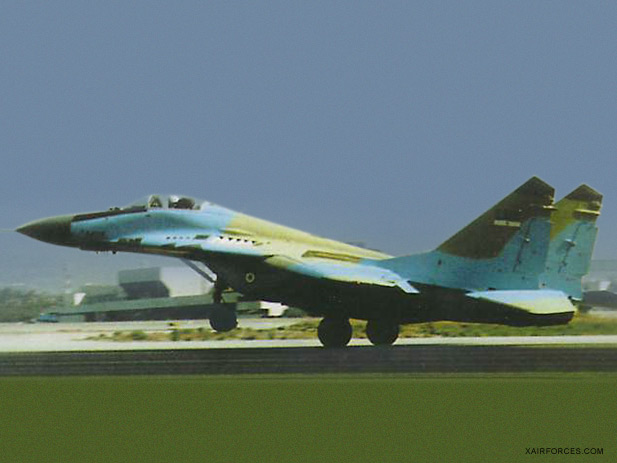
The MiG-29 is marketed worldwide and equals or surpasses the F-15C in several areas. The MiG-29's wings are swept-back and tapered with square tips. LERXs are wide and curved down to the front. LERX begins on the nose below the mid-mount point, and the wings’ trailing edges end at a high-mounted point. Twin jet engines are mounted low and to the sides of the fuselage. Diagonal-shaped air intakes give a box-like appearance. There is a large exhausts. The fuselage is made of a long, thin, slender body with long, pointed drooping nose. There is a high-mounted bubble canopy. The tail fins have sharply tapered leading edges, canted outward with angular, cutoff tips. Flats are high-mounted on the fuselage, movable, swept-back, and tapered with a negative slant.
The MiG-29 is a widely exported aircraft, flown by Iraq, Iran, North Korea and Cuba. The MiG-29 has a few advantages over its more electronically advanced American counterparts. At about 40 miles apart, the American planes have the advantage because of avionics. At 10 miles the advantage is turning to the MiG. At five miles out, because of the MiG weapons sight and better maneuverability, the advantage is to the MiG. The weapons sight is a helmet-mounted system that allows the missile to follow the line of sight of the pilot's helmet. Where the pilot looks is where it goes.
The US Department of Defense of the United States of America and the Ministry of Defense of the Republic of Moldova reached an agreement to implement the Cooperative Threat Reduction accord signed on June 23, 1997, in Moldova. The Pentagon pounced on the planes after learning Iran had inspected the jets and expressed an interest in adding them to their inventory. Although Iran already flies the less-capable Fulcrum A, it doesn't own any of the more advanced C-models. Of the 21 Fulcrums the United States bought, 14 are the frontline Fulcrum C's, which contain an active radar jammer in its spine, six older A's and one B-model two-seat trainer. This agreement authorized the United States Government to purchase nuclear-capable MiG-29 fighter planes from the Government of Moldova. This is a joint effort by both Governments to ensure that these dual-use military weapons do not fall into the hands of rogue states. From Oct. 20 to Nov. 2, 1997, loadmasters and aerial port experts squeezed two MiGs apiece, sans wings and tails, into the cargo holds of C-17 Globemaster III transports from Charleston Air Force Base, S.C. The Charleston airlifters delivered the MiGs to the National Air Intelligence Center at Wright-Patterson AFB near Dayton, Ohio. If the NAIC can discover how the Fulcrum works, Air Force pilots might gain an edge if they face the Fulcrum in future combat.
The MiG-29 upgrade project involves two main packages for customers. The first package offers the full upgrade of the aircraft up to the MiG-29SMT level. The second package offers the upgrade of certain aircraft units and aggregates and installation of new completing elements (including those of Western produce) to suit customers' requirements. In the process of upgrade, some share of contract works could be transferred to the aviation plants of the customer's country.
WEAPONS
The MiG-29 fighter is equipped with seven external weapon hardpoints.
"The MiG-29 has an information and fire control radar system."
The aircraft can carry: up to two R-27 air-to-air medium-range missiles; six R-73 and R-60 air-to-air short range missiles; four pods of S-5, S-8, S-24 unguided rockets; air bombs weighing up to 3,000kg; and 30mm built-in aircraft gun with 150 rounds of ammunition.
The R-27 medium-range air-to-air missile is supplied by the Vympel State Engineering Design Bureau, based in Moscow. The R-27 is available in two configurations: the R-27R, which has a semi-active radar homing head and inertial navigation control with a radio link; and the R-27T missile, which is fitted with an infrared homing head. The missile can intercept targets with a speed of up to 3,500km/hour at altitudes from 0.02-27km, and the maximum vertical separation between the aircraft and the target is 10km.
The Vympel R-73 missile is an all-aspect, short-range air-to-air missile known by the NATO codename AA-11 Archer. The missile has cooled infrared homing and can intercept targets at altitudes between 0.02 and 20km, target g-load to 12g, and with target speeds to 2,500km/hour.
The Vympel R-60 (NATO codename AA-8 Aphid) short-range air-to-air missile can engage targets manoeuvring at an acceleration up to 12g. The R-60M has an expanded range of target designation angles to +/- 20 degrees, a heavier warhead and an upgraded infrared homing head with photodetector cooling.
TARGETING
The aircraft is equipped with an information and fire control radar system comprising: an N-019 radar developed by Phazotron Research and Production Company, Moscow; an infrared search and track sensor; a laser rangefinder; and a helmet-mounted target designator.
For longer-range air combat, the MiG-29 uses radar guidance for the R-27 missile.
"The aircraft's fixed-wing profile with large wing leading edge root extensions gives good manoeuvrability."
ENGINES
The MiG-29 is equipped with two RD-33 turbofan engines. The MiG-29 is the world's first aircraft fitted with dual-mode air intakes. During flight, the open air intakes feed air to the engines. While moving on the ground, the air intakes are closed and air is fed through the louvres on the upper surface of the wing root to prevent ingestion of foreign objects from the runway. This is particularly important when operating from poorly prepared airfields.
The engines provide a maximum speed of 2,400km/h at altitude and 1,500km/h near the ground and the service ceiling is 18,000m. The maximum range at altitude is 1,500km and 700km near the ground.
Source:
http://www.fas.org/nuke/guide/russia/airdef/mig-29.htm
http://www.airforce-technology.com/projects/mig29
http://www.globalsecurity.org/military/world/russia/mig-29.htm



 4/5 Generation Fighters