The historical development of aviation in Brunei and the Royal Brunei Air Force (RBAirF) is characterized by its evolution from a small helicopter wing within the army into a professional, specialized force focused on maritime surveillance and rotary-wing mobility.
Foundations: The Royal Brunei Malay Regiment (1966–1984)
Brunei's military aviation began on September 16, 1966, with the establishment of the Air Wing of the Royal Brunei Malay Regiment. During this foundational period, the wing operated primarily as a support element for ground forces. By 1980, the air arm was a small component of approximately 100 personnel with no combat aircraft. Its inventory consisted of light transport aircraft like the HS-748 and Cherokee, alongside a utility helicopter fleet of Bell 205A, Bell 206, and Bell 212 models. At this time, all air services remained integrated within the Army.
Expansion and Transition (1984–1991)
As Brunei attained full independence, the air arm was renamed the Royal Brunei Armed Forces Air Wing in 1984. This era marked the beginning of a shift toward more specialized roles, including search and rescue (SAR) and counter-insurgency (COIN). By the early 1990s, the force had grown to 300 personnel and inducted its first armed capabilities, including a squadron of Bo-105 helicopters for armed reconnaissance and COIN roles, and SF-260W aircraft for training and light attack.
The Modern Era: Royal Brunei Air Force (1991–Present)
The service achieved its current identity on October 1, 1991, when it was officially renamed the Royal Brunei Air Force (Angkatan Tentera Udara Diraja Brunei). Throughout the late 1990s and 2000s, the RBAirF focused on modernizing its rotary fleet to meet the demands of the country's difficult jungle terrain and maritime environment.
Key milestones in the modern era include:
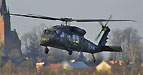
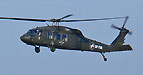
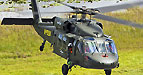
- Rotary Fleet Modernization: The RBAirF significantly upgraded its transport capability by transitioning to the Sikorsky S-70i Black Hawk. By 2024, the fleet reached 12 active units, expanding further to 16 units by 2026.
- Maritime Surveillance: To protect Brunei's maritime interests, the force transitioned from the CN235M to the more capable Airbus C295 platform, with three active and two on order by 2026.
- Utility Enhancements: The recent induction of the Airbus H145M (6 units active by 2026) has further modernized the light utility and support roles.
Strategic Context and Vision Brunei 2035
Today, the Royal Brunei Air Force operates as a professional force of approximately 1,100 personnel. Under the Vision Brunei 2035 framework and the 2021 Defence White Paper, the force is prioritizing the improvement of C4ISR capabilities (Command, Control, Communications, Computers, Intelligence, Surveillance, and Reconnaissance) to compensate for its relatively small size.
Brunei maintains critical international aviation partnerships, hosting a British military presence (including a helicopter flight) and a permanent Singapore Armed Forces training facility. The RBAirF remains a vital component of national security, providing airspace control, maritime patrol, and disaster relief capabilities in the Southeast Asian region.



 4/5 Generation Fighters