|
The historical development of Libyan Aviation and the Libyan Air Force is a story of rapid, oil-funded expansion during the Cold War, followed by decades of international isolation, regional conflict, and eventual fragmentation into rival factions.
1. Foundations and the Royal Era (1951–1969)
The air arm was established in 1951 as the Royal Libyan Air Force (Al Quwwat al Jawwiya al Malakiya al Libiyya) shortly after the nation gained independence. During this formative period, the service remained modest, focused on internal security and building basic organizational structures with Western guidance.
2. Revolutionary Expansion and the Great Arms Boom (1969–1977)
Following the 1969 coup that brought Muammar Qadhafi to power, the service was renamed the Libyan Arab Republic Air Force. This era was defined by a "great arms boom" fueled by almost unlimited cash from oil revenues.
- French Partnership: In 1971, France became a primary supplier, selling hardware and signing pilot training agreements. Libya placed a massive initial order for 110 Dassault Mirages, including 60 Mirage 5D fighter-bombers, 30 5DE interceptors, 10 5DD trainers, and 10 5DR reconnaissance aircraft.
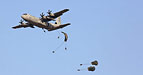
- Western Transports: In 1971, Libya inducted eight Lockheed C-130H Hercules transports. However, a subsequent US embargo on spare parts for the Hercules caused significant long-term maintenance challenges.
- Italian Training: Italy provided substantial support, including an order for 250 SIAI-Marchetti SF260WL primary trainers, with plans to establish a domestic assembly plant in Libya. Libya also procured CH-47C Chinook helicopters built under license in Italy by Meridionali.
3. The Soviet Pivot and Regional Conflict (1977–2011)
In 1977, the force was reorganized as the Air Force of the Libyan Arab Jamahiriya. During this period, Libya became one of the few Arab states receiving large-scale military aid from the Soviet Union.
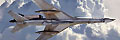
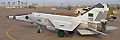
- Strategic Reach: By the late 1970s and 80s, the force received squadrons of MiG-23 interceptors, MiG-27 strike aircraft, and Tu-22 strategic reconnaissance aircraft. The USSR even maintained a MiG-25 reconnaissance unit within Libya for surveillance over the Mediterranean.
- Organizational Model: The force adopted a Soviet-style structure, with an Air Defence Command responsible for ground-based missiles and surveillance, and air elements organized into regiments typically managing three subordinate squadrons each.
- Regional Intervention: Libyan aviation was heavily involved in regional conflicts, such as the war in Chad, where significant amounts of hardware, including SF260s and combat helicopters, were committed.
4. Civil War and Fragmentation (2011–2026)
The 2011 revolution led to the disintegration of the unified air force, with some elements forming the "Free Libyan Air Force" to support the uprising. Since then, Libyan aviation has remained split between rival political entities:
- Fragmented Control: By 2022–2024, two main governments claimed authority: the Tripoli-based Government of National Unity (GNU) and the eastern-based Libyan Arab Armed Forces (LAAF) under General Khalifa Haftar.
- Foreign Involvement: Both factions have relied on external support. The Wagner Group (a Russian private military company) maintained a presence at LAAF-controlled air bases, while Turkey provided significant activities and support to the GNU in the west.
- Readiness and Attrition: By 2025, heavy use of assets and a lack of spare parts reduced operational readiness to an estimated 30–40% of the total inventory.
>Libya Aviation Inventory Index (2024–2026)
Based on the fragmented status of national forces.
Forces by Role & Equipment by Type
• AIRCRAFT ε45 combat capable (Combined Total).
Fighter / Interceptor:
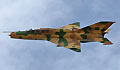
- MiG-21MF (Fishbed).
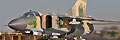
- MiG-23ML (Flogger G).
- MiG-25 (Foxbat) (Limited/Serviceability in doubt).
- MiG-29 (Fulcrum) (Operator uncertain/Wagner associated).
Fighter / Ground Attack:
- MiG-23BN (Flogger F).
- Su-22 (Fitter).
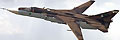
- Su-24 (Fencer D).
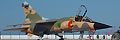
- Mirage F1 (AD/ED).
Training & Light Attack (COIN):
- L-39ZO Albatros.
- SIAI-Marchetti SF260ML Warrior.
- G-2 Galeb.
- J-21 Jastreb.
Tactical & Strategic Transport:
- C-130H Hercules.
- Il-76 (Candid).
- An-12 (Cub); An-26 (Curl); An-32 (Cline).
- An-72 (Coaler).
- Il-18 (Coot).
• HELICOPTER ε25-30 active airframes.
Attack (Helicopter):
Multi-role & Transport:
- Mi-8 / Mi-171 (Hip).
- AS332L / H215 Super Puma.
- SA341 / SA342 Gazelle.
- CH-47C Chinook.
- AW139.
|



 4/5 Generation Fighters

-in-tobruk_01-03-2016.jpg)